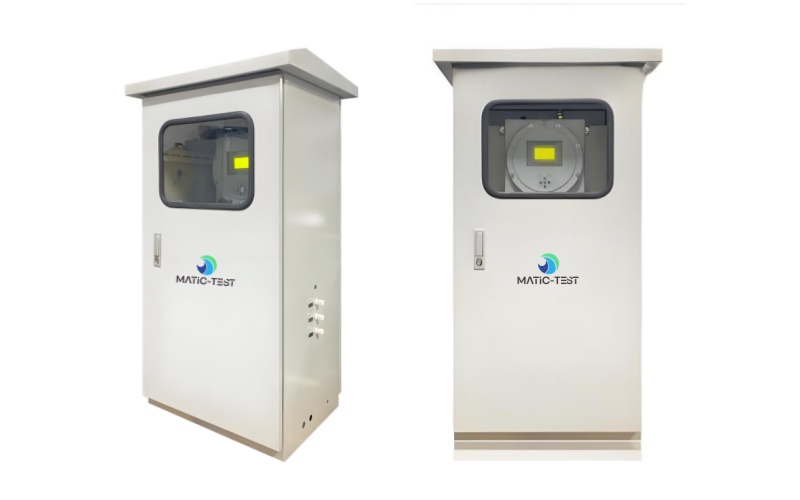
Trace moisture in highly corrosive gases such as HCL and CL2
Based on Faraday's law of electrolysis using phosphorus pentoxide electrolysis
Double-helix platinum wire electrode trace water sensor
Real-time monitoring and 3200 data storage
0-100-1000PPM
ExdⅡCT6
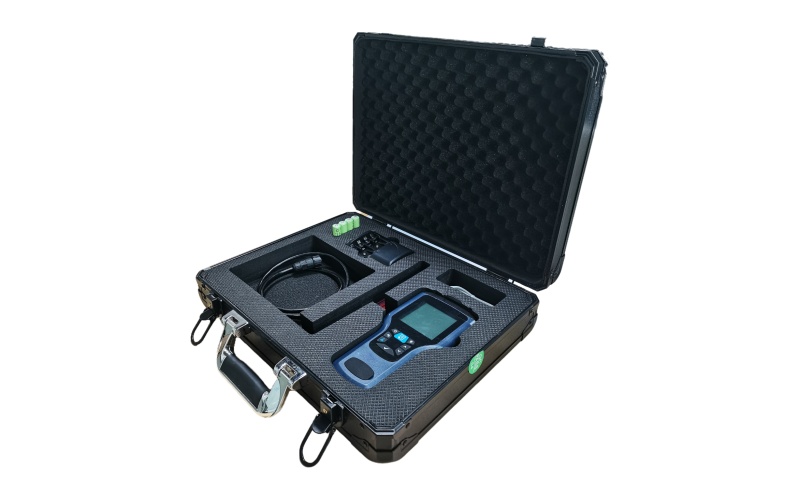
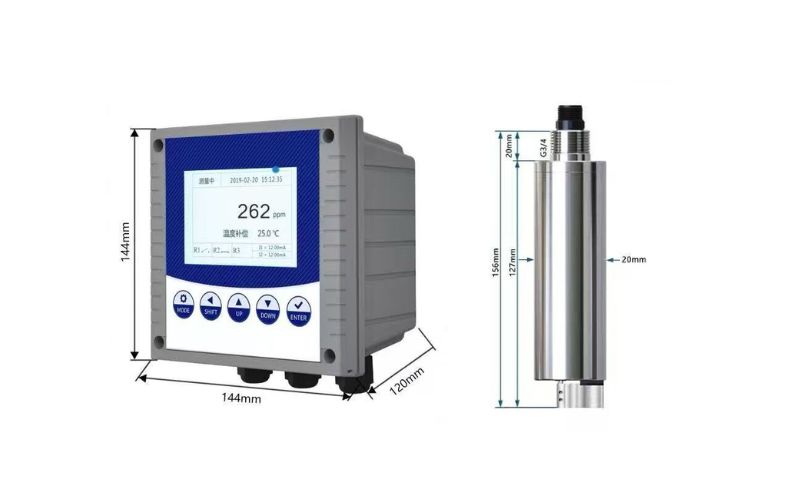
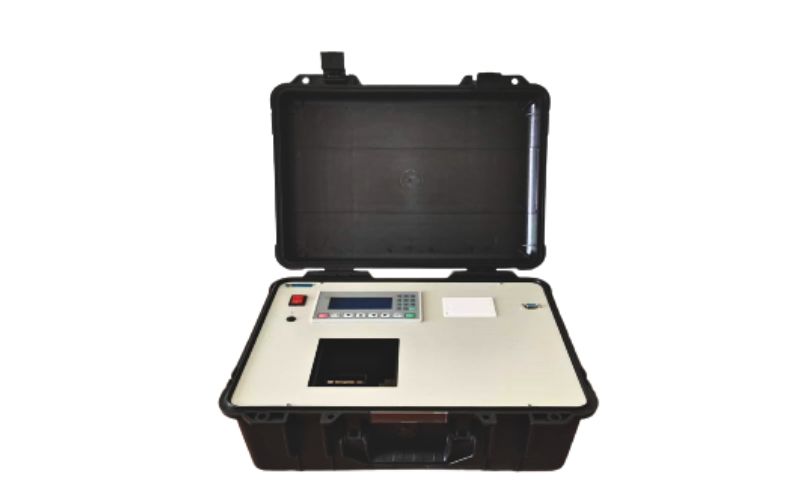
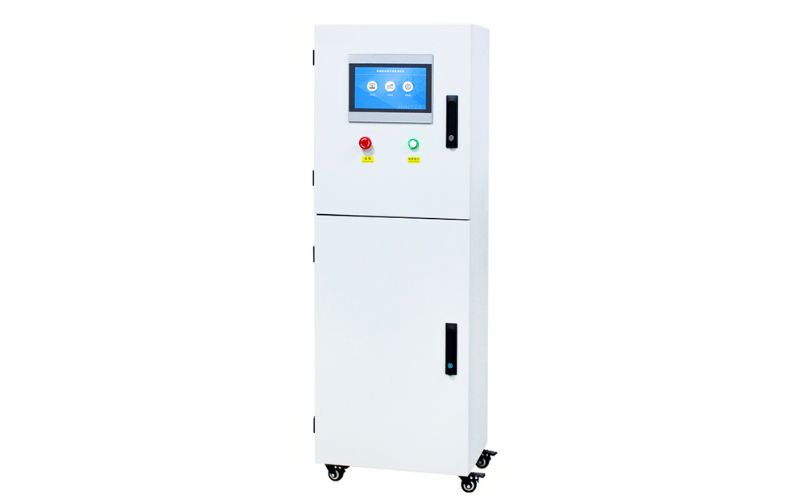
MT-ExM600 Online Explosion-proof Liquid Chlorine Trace Water Analysis System
The demand for online analysis of trace moisture is widely present in the chlor-alkali industry. The accurate analysis of trace moisture in highly corrosive gases such as HCL and CL2 is of great significance for preventing the corrosion of turbine chlorine compressors and chlorine pipelines and safety monitoring. At present, traditional trace moisture measuring instruments mainly include chilled mirror dew point meters, capacitive dew point sensors, infrared spectrum trace moisture analyzers, etc.
Due to the particularity of the measurement environment, traditional measurement technologies have problems such as easy corrosion and damage of the probe, poor reliability, and high operating costs, which cannot meet the analysis requirements of trace water in corrosive gases in the chlor-alkali industry. The online trace water analyzer based on Faraday's law of electrolysis using phosphorus pentoxide electrolysis has many significant advantages. The analyzer can better meet the needs of measuring trace moisture in corrosive gases and meets the standard requirements of "HG/T 3941-2007 Determination of Moisture Content of Industrial Liquid Chlorine".
ExM600 is our new high-precision online trace water analysis system newly developed by our company. It adopts double-helix platinum wire electrode trace water sensor, combined with single-chip control technology, with high measurement accuracy, good stability, long service life, easy to use and operate.
Our explosion-proof electrolytic trace water analysis system designed and manufactured by Matictest Instruments, including design, manufacturing, guidance and commissioning, as well as relevant technical documents and drawings, complies with the following standards and specifications:
● ISA 5.1-2009 Instrument symbols and signs
● HG/T 20638-2017 Chemical Automation Design Regulations
● GB/T 12519-2010 General technical conditions for analytical instruments
● GB 3836.15-2000 Electrical equipment for explosive gas environments
● GB 50058-1992 Design specification for electrical installations in explosive and fire hazardous environments
● GB 50093-2002 Construction and acceptance specifications for automation instrumentation engineering
● BS IEC 61831-1999 Design and installation of online analyzer systems
● IEC 60079 Electrical equipment for explosive gas environments
● IEC 60529 Enclosure protection level (IP code)
● IEC/CENELEC Hazardous area cable housing and installation regulations
● ISA S 12.4 Instrument purging to reduce the level of hazardous areas
● ANSI/ISA S75.04-1995 Connection dimensions of flange control valves in explosive and hazardous environments
● ASME/ANSI B16.5 Pipe flanges and flange connectors
● ASME B31.3-2002 Process piping
● ASME Ⅷ Safety valve calibration procedures
● BS PAS 5308 Instrument cables
●GB/T 25480-2010 Basic environmental conditions and test methods for instrument transportation and storage
● GB/T 13384-2008 Technical conditions for instrument packaging
● SY 25-1995 Classification of electrical installations in petroleum facilities
● GB 50160-2018 "Design fire protection code for petrochemical enterprises"
●GBJ 235-97 "Industrial pipeline engineering construction and acceptance code" (metal pipeline section)
● GBJ 236-82 "Construction and Acceptance Specifications for Field Equipment and Industrial Pipeline Welding Projects"
● GBJ 232-82 "Construction and Acceptance Specifications for Electrical Installation Projects"
●GB50093-2002 "Construction and Acceptance Specifications for Industrial Automation Instrumentation Projects"
● HGJ 229-83 "Construction and Acceptance Specifications for Chemical Equipment and Pipeline Anti-corrosion Projects"
● SHJ 501-85 "Construction and Acceptance Specifications for Petrochemical Highly Toxic, Flammable and Combustible Medium Pipelines"
● HG 20509-2014 "Instrument Power Supply Design Regulations"
● HG 20510-2014 "Instrument Gas Supply Design Regulations"
● HG 20516-2014 "Automatic Analyzer Room Design Regulations"
● EEMUA NO.138 "Design and Installation of Online Analyzer Systems"
●SH 3006 "Petrochemical Control Room and Automatic Analysis Room Design Specifications"
● SH 3081 "Petrochemical Instrument Grounding Specifications"
● ANSI B16.104 "Seal leakage"
● MSS-SP-25 "Nameplate and stamp"
● GB/T13384 "General technical conditions for packaging of electromechanical products"
● GB/6388-86 "Transport packaging and delivery mark"
● GB/T4064-83 "Guidelines for safety design of electrical equipment"
● GB/4720/GB3797/GB3047.1 "Electrical control equipment production specifications"
● JJG500-2005 Electrolytic method humidity meter calibration procedures
● GB/ T 5832.1 Determination of trace water in gas Electrolytic method
●HG/T 3941-2007 Determination of moisture content of industrial liquid chlorine Coulometric method
(Note: If the above standards are replaced by new standards, the latest standard version shall be implemented)
1. This trace water analysis system uses a 128×64 dot matrix LCD display with high brightness, no viewing angle influence, intuitive and eye-catching, and can record water content values regularly when no one is on duty, and can store up to 3200 data.
2. It uses explosion-proof buttons and full English menu operation, which is easy to understand, simple and reliable.
3. The double-helix electrode trace water sensor is selected, which has the characteristics of long life, good stability, high precision and fast response.
4. Large screen dot matrix LCD display, you can choose the display unit: volume ratio PPM or mg/m3.
5. Measurement data is automatically recorded in real time, and the recorded data can be displayed in the form of curves or lists.
6. Two control points that can be set arbitrarily, passive relay output, standard 4~20mA current output
7. Standard MODBUS-RTU protocol RS485 communication port, can communicate with the computer.
8. The sensor samples precious metal platinum wire electrodes, with a normal service life of more than 10 years.
9. Explosion-proof housing, safe, reliable and easy to install.
(1) Measuring range: 0-100-1000PPM;
(2) Resolution: 0.1PPM;
(3) Accuracy: ≤±5%FS;
(4) Repeatability: ≤±2%FS;
(5) Response time: T90 ≤5min;
(6) Flow rate: 100ml/min;
(7) Output signal: analog 4~20mA, digital RS-485;
(8) Ambient temperature: -10~50℃;
(9) Ambient humidity: 0~95%;
(10) Protection level: IP65
(11) Explosion-proof level: ExdⅡCT6
1) Explosion-proof trace water analyzer host, sensor and gas flow cell.
2) Gas pretreatment unit and nitrogen purge unit.
3) Anti-corrosion system cabinet.
Refer to the system flow chart. When measuring, close the "purge switch valve", open the sampling point valve and slowly adjust the chlorine flow rate to 100ml/min. The instrument automatically measures the gas water content. After the data is stable, it is the chlorine water content.
When cleaning, regenerating and coating the sensor electrode, first close the "regulating valve" and then slowly open the purge valve, replace and purge the flow cell with nitrogen for 5-10 minutes, and then remove the sensor electrode.
It can achieve 24-hour online monitoring. The filtered sample gas enters the sampling flow cell of the analyzer, and after analysis, it is discharged to the dedicated sewage discharge pipeline (the sewage pipeline must be at normal pressure).
1. Cabinet installation location: indoor installation
2. Ambient temperature: -10℃~50℃
3. Altitude: less than 1800m
4. Relative humidity: 56% (25℃)
5. Earthquake intensity: less than 8 degrees
We have recommended some of our Related products to you. I hope you will be interested.