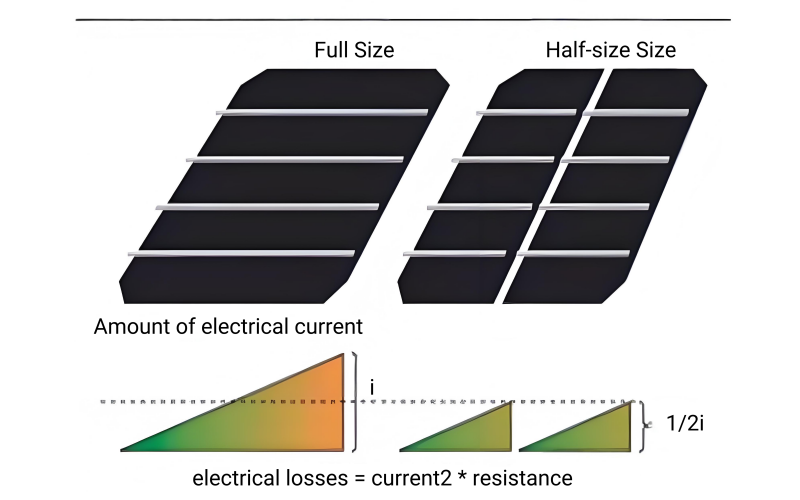
Why Does Increasing Solar Radiation Not Always Increase Photovoltaic Efficiency?
Why Does Higher Solar Radiation Not Always Boost Photovoltaic Efficiency?
In the practical operation of photovoltaic (PV) power stations, an interesting contradiction often appears: during May and June, solar radiation levels increase steadily, which theoretically means PV modules should receive more energy and generate more electricity. Yet, the actual power output frequently fails to meet expectations — it may even drop significantly. This article explains the reasons behind this paradox by examining the principles of photovoltaic efficiency.
I.Basic Principle: The Photovoltaic Effect
Photovoltaic power generation uses the photovoltaic effect: when sunlight strikes a semiconductor, it generates electric current by converting light energy directly into electrical energy.
How It Works:
Step | Process |
1 | Sunlight hits the PN junction formed by P-type and N-type semiconductors. |
2 | Photons excite electrons to jump from the valence band to the conduction band, forming electron-hole pairs. |
3 | The built-in electric field separates the charge carriers: electrons move to the N region, holes to the P region. |
4 | When an external circuit is connected, electrons flow through it to recombine with holes, generating current. |
In simple terms, more sunlight should generate more electricity — but only if other conditions remain ideal.
II.Key Factor: The Negative Impact of High Temperature
Unfortunately, high temperatures can severely affect photovoltaic efficiency in various ways:
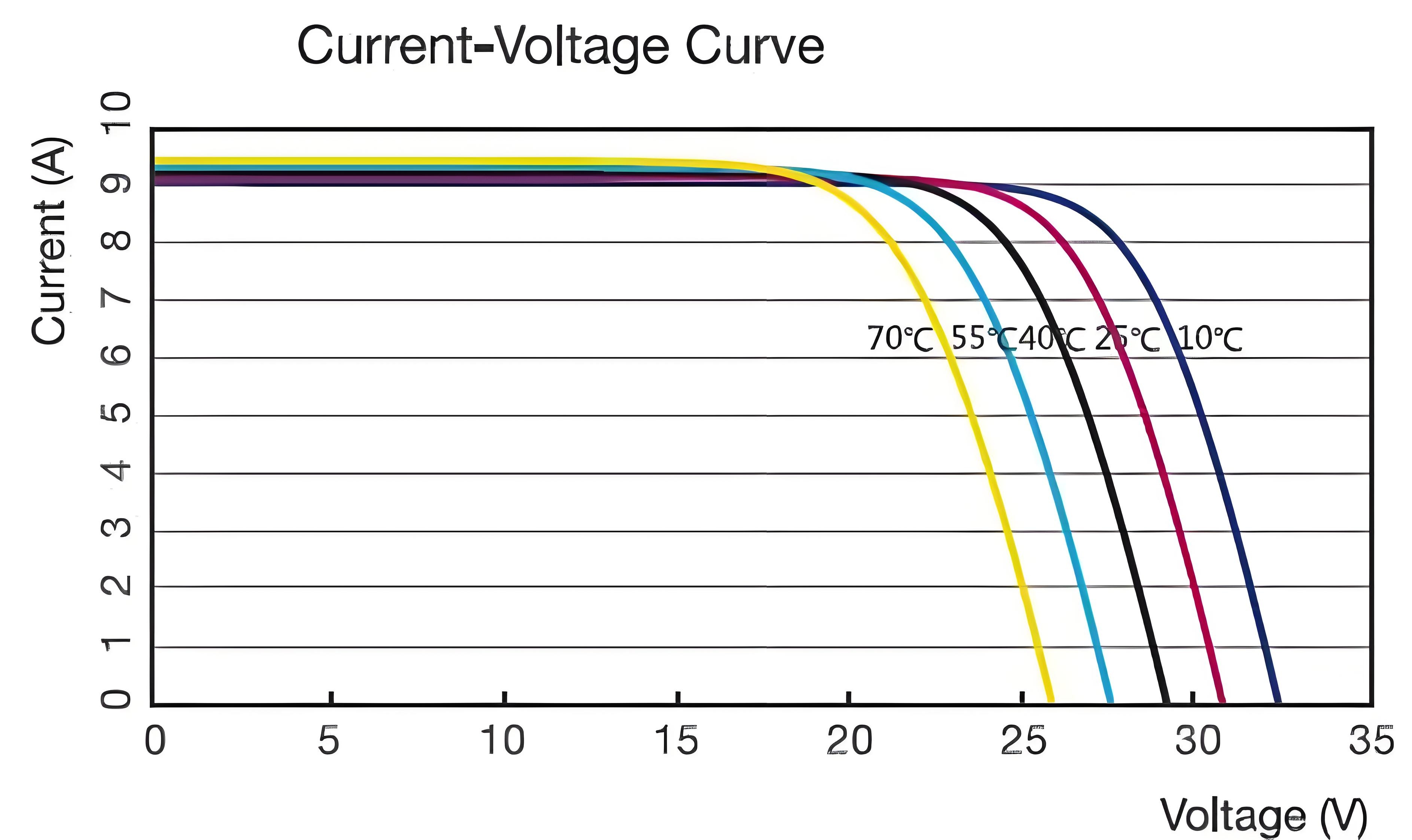
1. Reduced Open-Circuit Voltage (Voc)
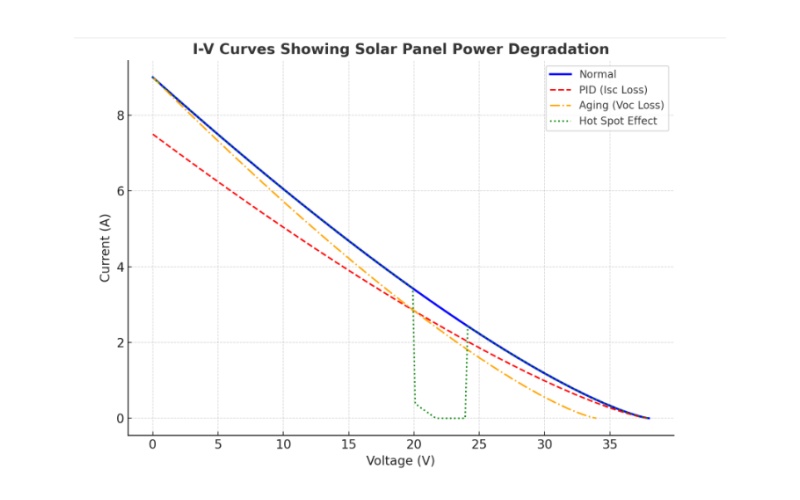
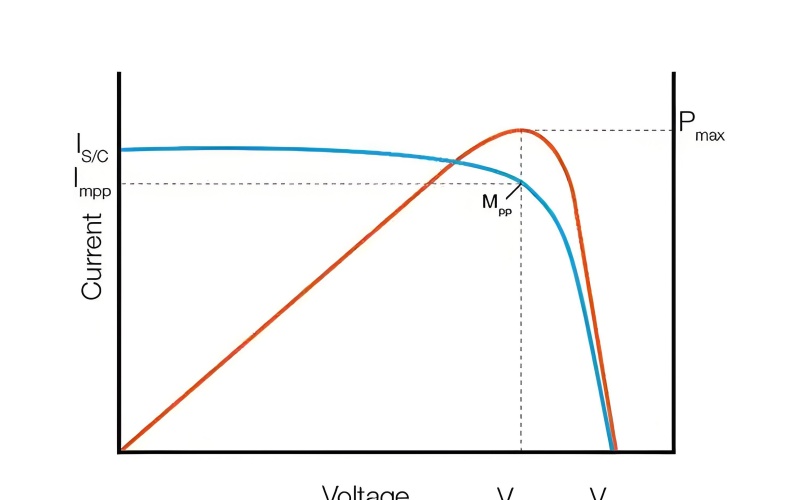
Rising temperatures weaken the semiconductor’s built-in electric field, lowering the efficiency of charge separation. As a result, the open-circuit voltage drops, directly reducing output power.
2. Increased Short-Circuit Current (Isc)
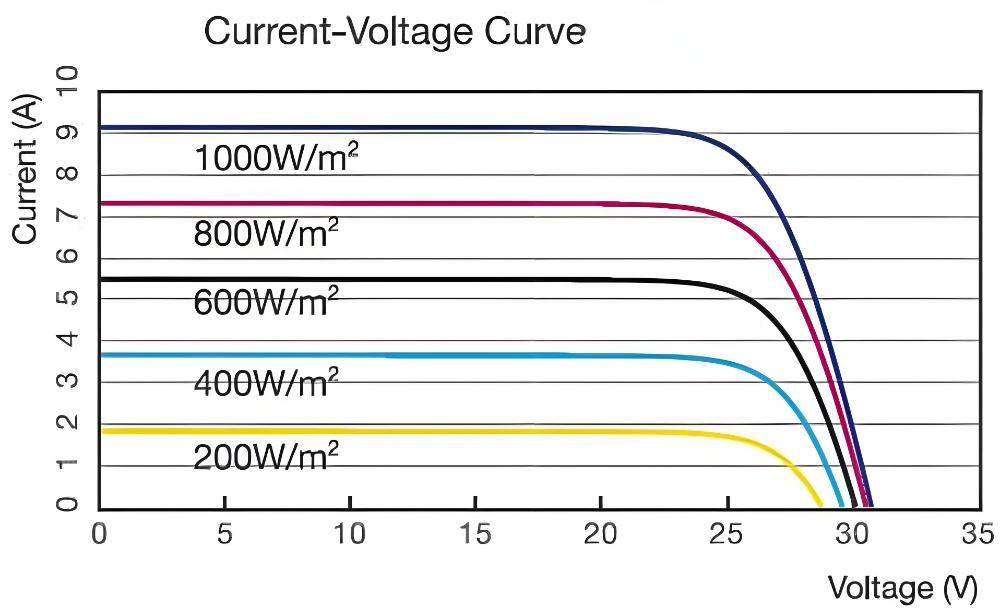
Higher irradiance and temperature boost the number of charge carriers, which increases the short-circuit current. However, this also generates more internal heat, further raising the module’s temperature and creating a vicious cycle. Prolonged exposure to high temperatures accelerates cell aging and reduces lifespan.
3. Lower Fill Factor (FF)
The fill factor, an important indicator of solar cell performance, declines as temperature rises. A lower fill factor means less peak power output.
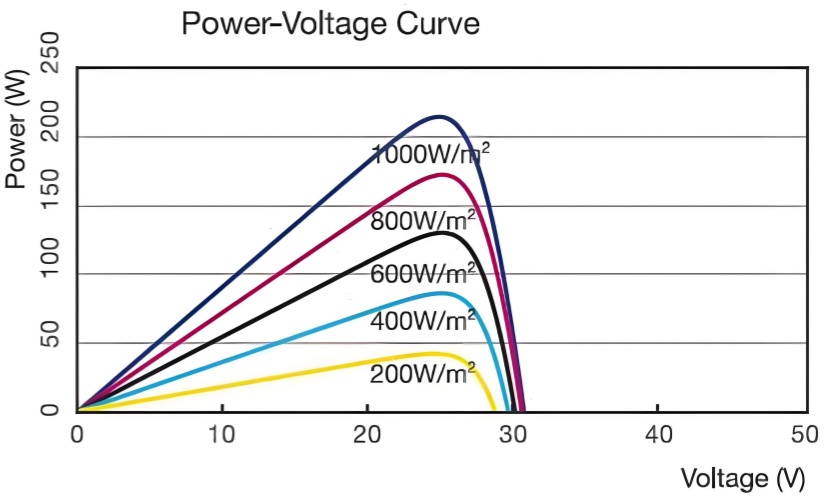
4. Decreased Peak Power (Pmax)
Due to reductions in open-circuit voltage and fill factor, the overall peak power (Pmax) decreases significantly.
Parameter | Effect of Increased Temperature |
Voc | Decreases |
Isc | Increases |
FF | Decreases |
Pmax | Decreases |
III. Additional Threat: The Hot Spot Effect
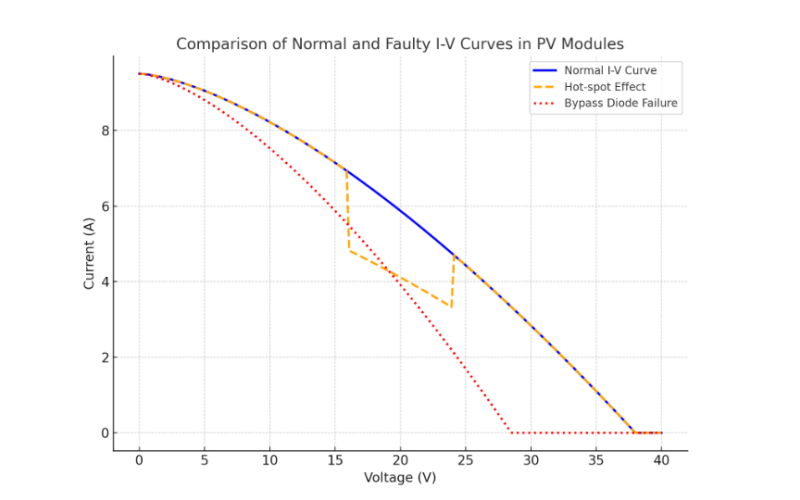
In real-world conditions, PV modules are often partially shaded by dust, leaves, or debris. Shaded cells act as loads instead of power generators — consuming energy produced by other cells. The excess energy converts to heat, creating local temperature spikes (hot spots) that can burn the cells, cause permanent damage, and even pose fire risks. High temperatures intensify this effect.
IV. Impact on Other System Components
A hot environment also affects other critical parts of a PV system:
Inverters: High temperatures can lower conversion efficiency and shorten lifespan.
Batteries: Heat accelerates battery aging and reduces capacity, affecting the whole system’s output.
How to Monitor and Optimize Photovoltaic Efficiency
Given these challenges, regular inspection and monitoring are essential to ensure your PV modules maintain optimal performance:
>> EL Tester: An Electroluminescence (EL) Tester helps detect hidden cracks, micro-defects, and potential hot spots before they cause serious damage.
>> IV Tester: An IV Tester measures the current-voltage characteristics of PV modules in real time, ensuring they operate within optimal parameters.
Combining these tools with proper maintenance — cleaning panels, removing debris, and ensuring adequate ventilation — will minimize temperature-related losses and maximize your photovoltaic efficiency.
Conclusion
While increased solar radiation should, in theory, generate more electricity, real-world conditions like high temperatures and shading can reduce photovoltaic efficiency. Understanding these factors — and using advanced testing tools like EL Testers and IV Testers — helps PV operators maintain stable power output throughout the year.