Basic Conditions and Technical Specifications for Perovskite Solar Cell Testing
Basic Conditions and Technical Specifications for Perovskite Solar Cell Testing
1. Environmental Requirements
1.1 Temperature Control
Standard testing should be conducted at approximately 25°C. For stability testing, Level 2 of ISOS-D testing requires temperatures of either 65°C or 85°C.
1.2 Humidity Control
Standard testing is performed under ambient humidity conditions. Level 3 of ISOS-D testing requires a relative humidity of 85%.
1.3 Illumination Conditions
Light intensity must reach 1000 W/m² with a spectrum conforming to the AM 1.5G standard. For light stability testing, a solar simulator is recommended, though LED or halogen lamps may be used as alternatives, provided the light source type is clearly specified.
Table 1: Environmental Parameter Requirements
Test Type | Temperature (°C) | Humidity (%RH) | Illumination Conditions |
Standard Testing | 25 ± 2 | Ambient humidity | 1000 W/m², AM 1.5G |
ISOS-D-2 | 65 / 85 | - | - |
ISOS-D-3 | - | 85 | - |
2. Equipment Requirements
2.1 Core Testing Equipment
· Solar Simulator: Must meet Class A standards to ensure stable and uniform illumination.
· Electrical Measurement Devices: Including source meters and digital multimeters for precise current and voltage measurements.
· Environmental Control Equipment: Such as temperature and humidity chambers and thermal cycling chambers to simulate various environmental conditions.
2.2 Auxiliary Testing Equipment
· Scanning Electron Microscope (SEM): Used for surface morphology observation.
· Spectroscopic Equipment: Used for measuring light absorption spectra.
3. Testing Standards and Methods
3.1 Performance Testing
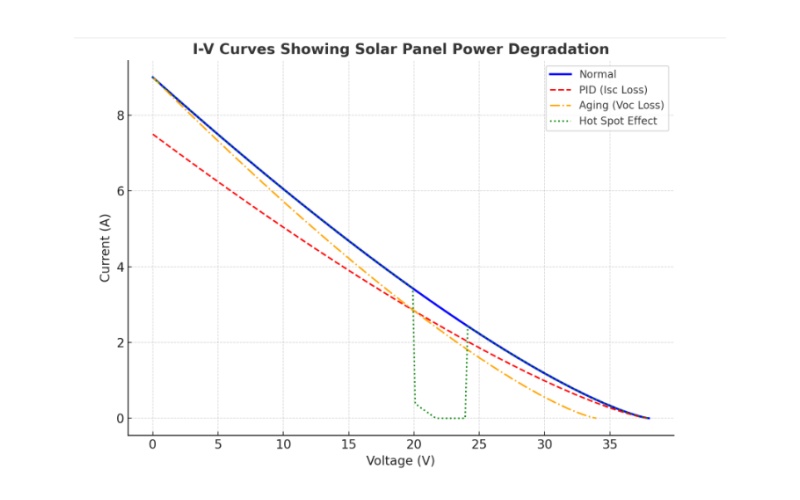
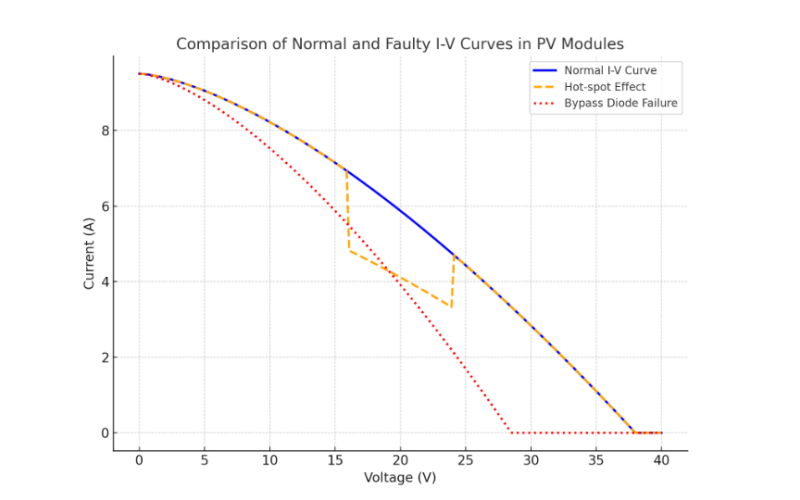
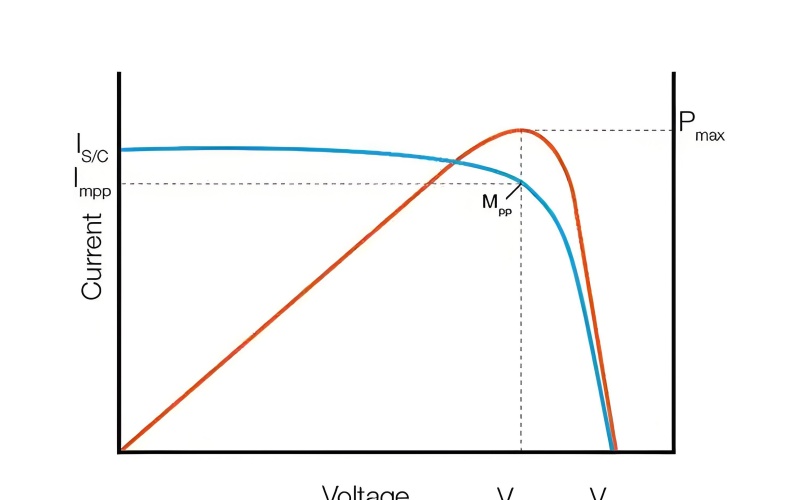
· Photovoltaic Conversion Efficiency (PCE) Testing: Calculated by measuring the current-voltage (J-V) curve.
· J-V Characteristic Curve Measurement: Obtains key parameters such as open-circuit voltage (VOC), short-circuit current density (JSC), and fill factor (FF).
3.2 Stability Testing
· Dark Storage Stability (ISOS-D): Evaluates device stability in dark conditions.
· Dark Bias Stability (ISOS-V): Evaluates device stability under bias conditions.
· Light Stability (ISOS-L): Evaluates device stability under illumination.
Table 2: Key Testing Methods and Parameters
Test Item | Testing Method | Measured Parameters |
PCE | J-V Curve Measurement | PCE Value |
Basic Electrical Properties | J-V Characteristic Curve Measurement | VOC, JSC, FF |
Light Absorption Properties | Light Absorption Spectrum Measurement | Light Absorption at Various Wavelengths |
Material Morphology | SEM Observation | Surface Morphology Images |
4. Testing Considerations
4.1 Hysteresis Effect Handling
· J-V curve measurements must account for scan speed and direction.
· It is recommended to provide curves at different scan directions and speeds.
· Scan speed should ideally be controlled within 10–100 mV/s.
4.2 Steady-State Efficiency Verification
· Apply a constant bias at the maximum power point of the J-V curve.
· Observe and record output current stability under continuous illumination and prolonged bias.
· A minimum stabilization observation time of 300 seconds is recommended.
4.3 Other Considerations
· Equipment must be properly calibrated before testing.
· Maintain stable environmental conditions to avoid fluctuations in temperature and humidity.
· Record all testing condition parameters comprehensively.
· Special testing conditions must be explicitly noted.
5. Conclusion
Accurate testing of perovskite solar cells requires strict control of environmental conditions, specialized testing equipment, adherence to standardized testing methods, and special attention to factors such as hysteresis effects. Establishing standardized testing procedures and comprehensive data recording systems is essential for obtaining reliable results.