Temperature Rise Reduces PV Power Generation Efficiency? How Heat Steals Solar Output
How High Temperatures Affect PV Efficiency – and How Testers Help Diagnose and Prevent Losses
1. Overview
Many assume that the hotter it gets, the more power solar panels generate. But in reality, high temperatures can reduce PV module efficiency by over 20%. This hidden performance loss affects solar power plants, especially during peak summer months. Understanding how temperature impacts output is essential — and just as important is having the right tools to measure and manage it. With professional IV testers, EL testers, and PV performance analyzers, you can detect early signs of thermal stress, evaluate real-time efficiency, and ensure long-term reliability of your solar modules.
2. Optimal Operating Temperature and Efficiency Losses
Aspect | Details |
Optimal temperature | ~25°C |
Efficiency loss per 1°C rise | 0.35% – 0.44% power output reduction |
Reason | Higher temperatures increase semiconductor resistance and reduce carrier mobility in solar cells |
Seasonal performance | Spring and Autumn = optimal, Summer = heat-induced efficiency loss |
Real-world Case Study:
In July 2024, a 2.55 MW PV plant in Southern China recorded 8.4% lower average daily output than the same period last year — despite better sunlight — due to heat-induced performance degradation.
3. Key Factors Affecting PV Module Temperature
(1) Ambient Temperature & Solar Irradiance
Factor | Impact |
Ambient Temperature | Directly raises module base temperature |
Solar Irradiance | Higher irradiance increases photon input, enhancing output — but also heats the module, reducing net gain through thermal effect |
Example: In desert regions, surface temperatures can exceed 70°C, reducing efficiency by at least 20% compared to optimal conditions.
Suggestions:
> Avoid overemphasis on irradiance without cooling strategies.
> Consider cooler regions or seasonal adjustments in energy yield forecasting.
(2) Mounting Method & Ventilation Conditions
Installation Type | Ventilation Efficiency | Temperature Effect |
Cement rooftops / Ground-mounted | Good (angled tilt, convection air flow) | Better heat dissipation |
Metal rooftops (e.g. steel) | Poor (low module-to-roof distance) | Poor airflow → higher heat retention |
Suggestions:
> Increase spacing between modules (e.g. from 1.5m to 2.0m) to improve air circulation.
> Optimize mounting tilt angles and allow sufficient clearance from roof surfaces.
(3) Dust Accumulation
Dust acts as an insulator and shading layer:
Impact of Dust | Details |
Blocking sunlight | Reduces photon absorption |
Forming heat insulation | Prevents proper heat dissipation |
Power output drop | Can exceed 5% loss if not cleaned |
Suggestions:
> Implement regular cleaning cycles, especially in dry and dusty regions.
> Consider anti-soiling coatings or cleaning robots for large installations.
(4) Module Encapsulation Method
Module Type | Thermal Conductivity | Cooling Performance |
Traditional backsheet | Poor | Less effective at dissipating heat |
Glass-glass (bifacial) | Better | Improved heat conduction through glass |
Why Glass-Glass Is Better?
Glass has lower thermal resistance than polymer backsheet, even if it seems thicker. Heat flows more easily, resulting in better cooling.
Suggestions:
> Use glass-glass modules in high-temperature environments.
> Consider dual-glass as a design standard in hot climates for long-term efficiency stability.
4. Summary and Recommendations (Including Product Solutions)
Problem | Cause | Suggested Solution | Related Testing Instruments |
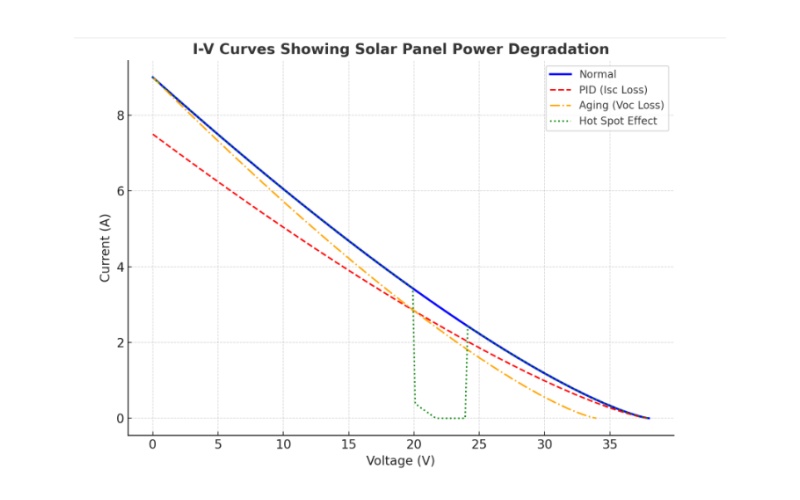
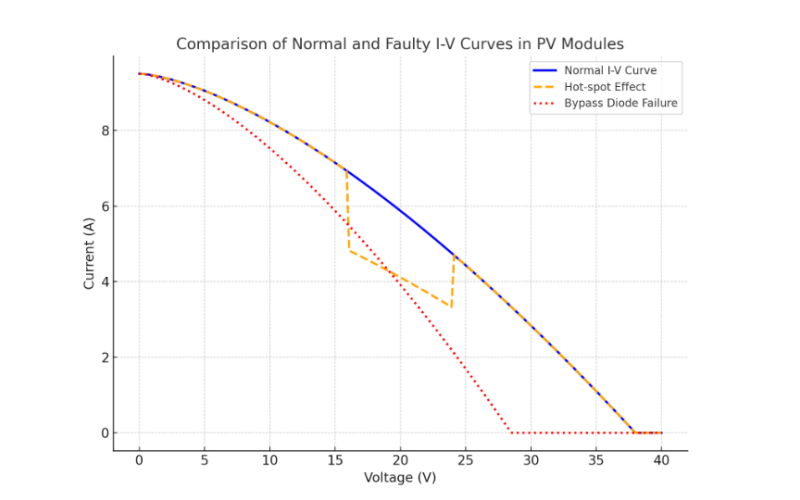
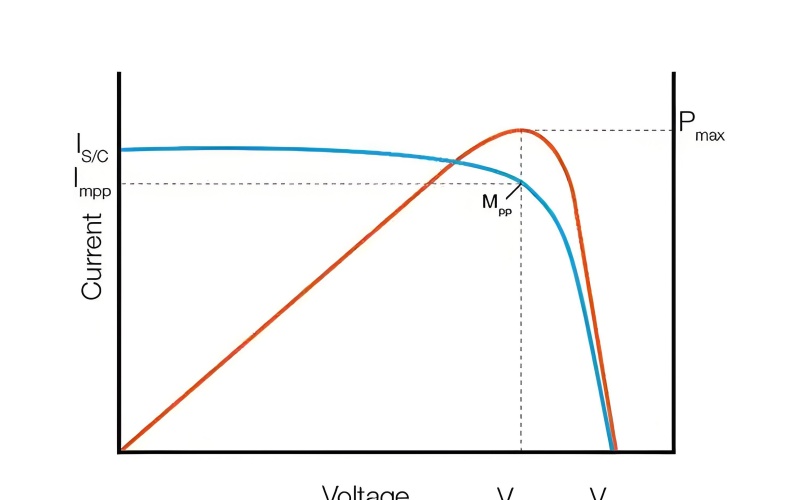
Efficiency drop in high temperature | Semiconductor degradation due to heat | Use better-ventilated installations, schedule performance evaluations during peak temperature periods | IV Tester – Detects power output decline and I-V curve deformation caused by high temperature |
Overheating due to solar irradiance | Excess heat accumulation despite high light input | Balance site selection between irradiance and ambient temperature; evaluate thermal response of modules | PV Tester – Assesses module output performance under varying irradiance and temperature conditions |
Poor ventilation from installation setup | Low clearance or poor airflow design | Increase module spacing; use elevated mounts; optimize installation angles | IV Tester – Tracks real-time output under different installation and ventilation scenarios |
Dust accumulation reduces cooling and output | Dirt blocks light and traps heat | Implement routine cleaning and monitoring programs | EL Tester – Detects microcracks and hotspots caused by dust-related thermal stress |
Insufficient heat dissipation in backsheet modules | Low thermal conductivity of traditional materials | Use double-glass modules in hot climates; evaluate thermal structure in design phase | EL Tester – Visualizes internal defects and thermal stress indicators not visible to the naked eye |
5. Role of Solar Module Testing Instruments in Heat-Related Performance Management
1. IV Tester (Current-Voltage Curve Analyzer)
Evaluates the actual power output and voltage/current response of modules under various temperatures.
Helps identify early signs of thermal-induced performance degradation.
2. PV Tester
Simulates solar irradiance conditions and measures temperature-dependent efficiency losses.
Assists in verifying module specifications under standard test conditions (STC) vs. actual operating conditions (NOCT).
3. EL Tester (Electroluminescence Imaging)
Detects microcracks, hotspots, and solder joint failures that may result from or worsen due to thermal cycling.
Essential for quality inspection in hot climates or after exposure to extreme conditions.
6. Conclusion (with Product Context)
Temperature is a silent efficiency killer in solar PV systems, especially in hot regions. By integrating scientific thermal management strategies with professional-grade module testing equipment such as IV testers, PV testers, and EL imaging systems, operators can:
Precisely monitor performance under thermal stress
Detect and resolve faults early
Extend module lifespan
Maximize ROI even in challenging temperature environments
Your company's solar testing instruments are not just quality control tools—they are essential components in the pursuit of high-efficiency, thermally resilient PV power plants.